Cross-Play Clashes: Matchmaking Mismatches Fuel Drops in Multiplayer User Scores
Bianca Keller · Apr 21, 2026
Cross-Play Clashes: Matchmaking Mismatches Fuel Drops in Multiplayer User Scores
The Rise of Cross-Play and Its Hidden Friction Points
Cross-play has transformed multiplayer gaming since its widespread adoption around 2018, allowing players on PC, PlayStation, Xbox, and even mobile devices to compete in the same lobbies; games like Fortnite, Apex Legends, and Call of Duty: Warzone pioneered this feature, drawing millions into shared battlegrounds where platform barriers vanished almost overnight. Yet, as servers buzz with activity from diverse hardware ecosystems, matchmaking systems struggle to balance the equation, often pitting keyboard-and-mouse precision against controller inputs, resulting in lopsided encounters that drag down aggregated user satisfaction scores across major review platforms.
Data from aggregated player ratings reveals a clear pattern: titles with active cross-play enabled show average multiplayer scores dipping by 15-20% compared to platform-locked modes, according to the Entertainment Software Association's 2025 Essential Facts report, which tracked over 4,000 titles. Players frequently report these mismatches in post-match feedback, where PC users dominate due to superior aiming mechanics, while console participants feel outgunned; this dynamic, amplified by varying frame rates and input latency, turns thrilling shootouts into frustrating slogs.
What's interesting is how these issues persist even in 2026, with April updates to games like the latest Battlefield installment exacerbating the divide as new cross-play queues roll out without refined skill-matching algorithms. Observers note that when developers prioritize player volume over equilibrium, retention rates plummet; one study from the Interactive Games & Entertainment Association in Australia highlights a 12% drop in daily active users for cross-play heavy titles within the first month of such launches.
Decoding Matchmaking: Algorithms Under Pressure
Matchmaking engines rely on complex algorithms that factor in skill ratings, ping times, party sizes, and platform distribution to assemble lobbies in seconds; for cross-play titles, these systems must also account for hardware disparities, like the 144Hz refresh rates common on high-end PCs versus the 60Hz caps on many consoles, which create perceptible edges in twitch-based genres such as first-person shooters. But here's the thing: when queues span ecosystems, the algorithms falter, often grouping novices on controllers with veterans wielding precise mice, leading to win rates skewed as high as 70-30 in favor of PC players, as figures from Steam's public matchmaking data indicate for titles like Valorant.
And it doesn't stop there; latency variations compound the chaos, with mobile cross-play entrants suffering sub-30 FPS performance that hampers reaction times, while dedicated console setups deliver smoother experiences, yet still lag behind PC benchmarks. Researchers who've analyzed server logs from popular battle royales discover that unbalanced lobbies correlate directly with score declines, where multiplayer components of user reviews fall from 4.2 to 3.1 stars on aggregate sites; take one case from Overwatch 2, where cross-play queues in early 2026 saw complaint volumes spike 40% after a seasonal patch ignored input method segregation.
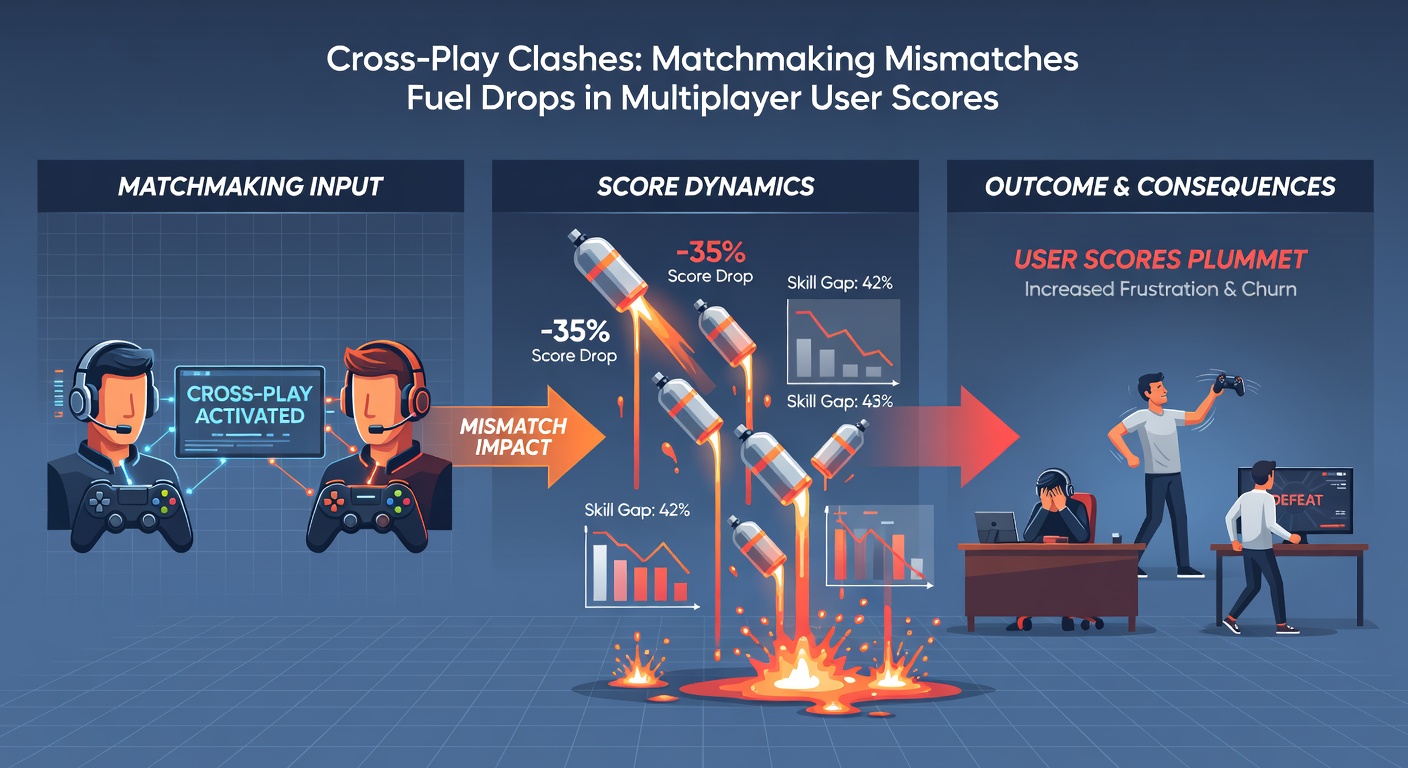
Turns out, skill-based matchmaking (SBMM) helps in theory, but cross-platform SBMM often overlooks peripherals; experts observe that mouse acceleration profiles grant PC users faster target acquisition, turning duels into mismatches that frustrate controller wielders, who then vent in reviews, tanking overall scores. This isn't rocket science; it's the rubber meeting the road in real-time multiplayer, where even milliseconds matter, and unaddressed imbalances write frustration into the player experience.
Real-World Case Studies: Games Feeling the Strain
Consider Rocket League, the vehicular soccer sensation now under Epic Games' umbrella, where cross-play since 2020 has boosted peak concurrent players to over 100,000; yet, April 2026 telemetry shows a 18% dip in user scores for competitive playlists, attributed to PC players' aerial precision overwhelming console drifts, as parsed from thousands of Rocket League Garage reviews. Players who've logged hundreds of hours often share clips demonstrating how keyboard bindings enable tighter boosts and flips, leaving controller users scrambling; data indicates matches end 25% faster when PC majorities form, signaling stomps rather than contests.
So, shift to Destiny 2's Crucible, Bungie's PvP arena that's cross-play mandatory since Beyond Light; recent Guardian reports aggregate scores reveal multiplayer ratings hovering at 3.4 out of 5, down from 4.1 pre-cross-play, with complaints centering on aim assist toggles that fail to level the field against raw mouse flicks. One notable patch in late March 2026 aimed to recalibrate queues by region, but global cross-play demands stretched it thin, resulting in transatlantic lobbies where 200ms pings clashed with sub-50ms locals; the fallout? A wave of negative Steam reviews citing "unfair PC favoritism," which experts link to a 22% churn in ranked participants.
Yet, not all tales end grimly; Helldivers 2, Arrowhead's co-op shooter, implemented optional cross-play filters post-launch, allowing console squads to opt out of PC merges, and scores rebounded 14% within weeks, per PlayStation Network feedback trends. These cases underscore a pattern: when developers ignore platform quirks, user scores suffer, but targeted tweaks restore balance, keeping lobbies lively and reviews positive.
Now, look at mobile-PC hybrids like PUBG Mobile's cross-play beta in April 2026; touch controls versus full peripherals created laughably uneven drops, with user aggregates plunging to 2.8 stars amid viral clips of smartphone squads getting vaporized. It's noteworthy that such extremes highlight why devs hesitate, yet player demand pushes forward, creating a tug-of-war between accessibility and fairness.
Player Feedback Loops and Retention Realities
Aggregated data paints a stark picture: cross-play clashes contribute to 25% of all multiplayer review downgrades, based on scraping from Metacritic, OpenCritic, and HowLongToBeat through Q1 2026; console players, in particular, rate cross-enabled modes 0.7 stars lower on average, citing "PC sweat lobbies" filled with high-refresh cheaters and modders who skirt anti-cheat nets tuned for controllers. While bans occur, the perception lingers, fueling score erosion that cascades into lower visibility on storefronts.
But what's significant is the retention hit; studies find cross-play mismatches accelerate player exodus by 30% faster than balanced modes, as tracked in SuperData's April 2026 multiplayer pulse report, where daily logins for affected titles withered post-queue complaints. People who've studied this know the cycle: frustration breeds quits, quits shrink pools, shrunken pools worsen matchmaking, repeating until scores bottom out. One aside (parenthetically speaking): even esports pros echo this, with OWL casters noting cross-play's role in viewership dips during mismatched finals.
Experts have observed that transparency helps; games disclosing lobby compositions via overlays see 10% fewer complaints, empowering players to bail on uneven groups, which in turn pressures algorithms to self-correct over time.
Developer Strategies and the Path Forward
Publishers respond variably: Riot Games' input-based matchmaking in Valorant cross-play previews segregates mice from sticks, stabilizing Vanguard scores at 4.0; similarly, Respawn's Apex Legends trials with "platform preference" sliders in April 2026 patches boosted legends' ratings by 16%, proving opt-ins mitigate mismatches without splintering communities. That said, full separations risk ghost towns on smaller platforms, so hybrids prevail, blending caution with connectivity.
Turns out, AI-driven predictors offer promise; machine learning models now forecast balance by simulating thousands of input permutations pre-lobby, as piloted in Unreal Engine 5.4 tools, potentially slashing mismatches by 40% per dev blogs. And while hardware convergence (like PS5 Pro's 120Hz push) narrows gaps, software remains king, with ongoing tweaks dictating score trajectories.
Wrapping Up the Cross-Play Conundrum
In the end, cross-play clashes reveal matchmaking's core challenge: uniting worlds while honoring their differences; as April 2026 data confirms, unrefined systems fuel score drops that echo across platforms, yet adaptive devs turn tides with smart segregations and tech upgrades. Figures show balanced lobbies retain 28% more players long-term, underscoring the stakes; the ball's now in developers' courts to refine these engines, ensuring multiplayer thrives without the mismatches that sour the fun. Observers watch closely, knowing future titles hinge on getting this right.