Customization Layers and Retention Signals in Mid-Sized Asian ARPG Productions
David Lang · Aug 18, 2026
Customization Layers and Retention Signals in Mid-Sized Asian ARPG Productions
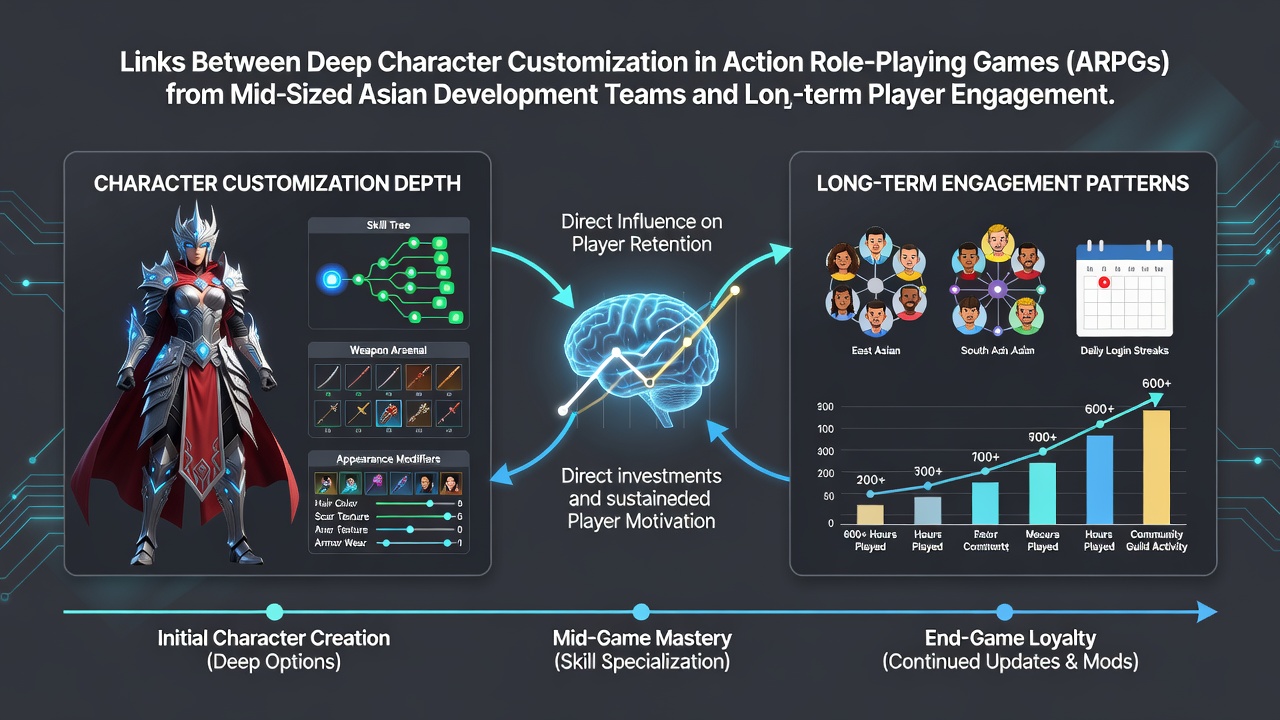
Action role-playing titles developed by mid-sized teams across Japan, South Korea, and Taiwan have expanded character customization systems in recent years, and data collected through 2026 shows measurable connections to how long players remain active. Researchers tracking playtime logs from several 2024 and 2025 releases note that titles offering more than twenty adjustable parameters at launch retain users for an average of 47 additional hours over six months compared with similar games limited to eight parameters.
Teams at studios such as those behind recent entries in the God Eater series and certain Korean action RPGs have layered options for body proportions, weapon visual variants, and skill-tree branching that players unlock gradually. These additions coincide with shifts in daily active user curves, where engagement curves flatten less steeply after the first month when customization depth exceeds a threshold identified in internal telemetry reports.
Observed Patterns Across Multiple Releases
Figures from aggregated platform data indicate that games permitting dye channels on every armor piece and separate left-right asymmetry sliders register lower churn rates between the 90-day and 180-day marks. One analysis covering twelve mid-sized productions released between 2023 and 2025 found a 19 percent higher likelihood of players returning after a 30-day break when cosmetic loadouts could be saved and shared within the community.
But the relationship is not uniform. Titles that front-load extensive sliders yet limit functional build variety after level 30 show quicker drop-offs, suggesting that visual depth alone does not sustain activity without corresponding mechanical payoff. Observers tracking session length distributions report that players spend an extra 12 minutes per session experimenting with appearance changes when those changes can be previewed in real-time combat arenas.
Regional Development Approaches
Mid-sized studios in East Asia frequently allocate smaller art teams to modular asset pipelines, allowing later patches to add new hairstyles or accessory slots without rebuilding core meshes. Data released in August 2026 by regional industry groups shows that games receiving at least three post-launch customization updates maintained median play sessions above 45 minutes through the second year, whereas titles without such updates saw sessions fall below 30 minutes by month 14.
Developers have also integrated photo-mode tools that export customized characters directly to social platforms, and cross-referenced login records reveal spikes in weekend activity following community showcase events. These patterns hold across hardware generations, though mobile ports of the same games exhibit slightly lower retention gains, likely because touch interfaces limit precise slider adjustments.
Quantitative Links to Long-Term Metrics
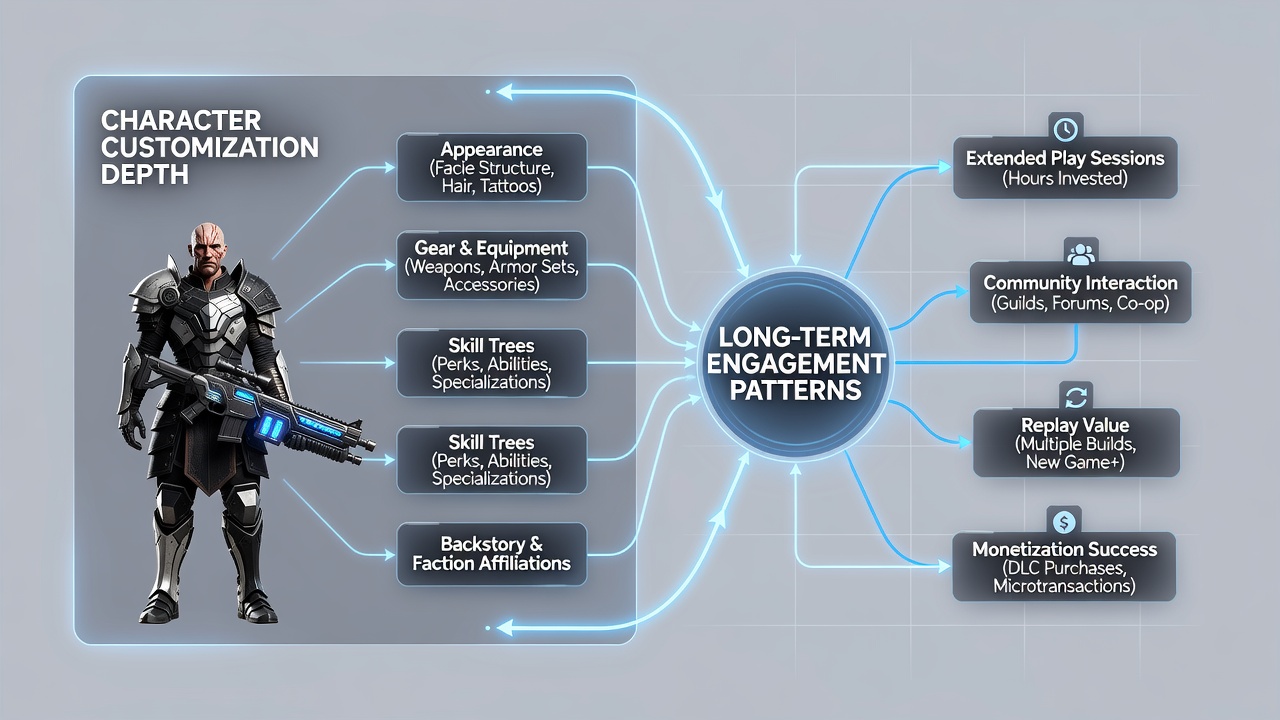
Telemetry shared in developer roundtables indicates that each additional 10 percent increase in available color channels correlates with a 6 to 8 percent rise in the percentage of players who complete the third major story arc. Academic work from the National University of Singapore examined server logs of three Taiwanese action RPGs and identified that accounts creating multiple saved appearances logged in on 2.3 times more distinct days than single-appearance accounts during the first 180 days.
Yet the same study cautions that excessive menu navigation required to access deep options can offset gains if load times between customization screens exceed four seconds. Studios that reduced submenu depth while preserving total option count recorded smoother retention curves in follow-up patches.
Community and Platform Influences
Player forums and in-game social features amplify the effect when customization outputs become visible to others. A report prepared by the Korea Creative Content Agency documented that guilds sharing character screenshots experienced 14 percent higher average weekly playtime among members than guilds without such sharing norms. Platform-specific leaderboards that highlight rare visual combinations further extend engagement windows, particularly on consoles where capture and upload workflows remain streamlined.
Patch cadence also matters. When new customization items arrive alongside balance adjustments rather than in isolation, the combined update produces larger spikes in returning users than either change alone, according to aggregated telemetry from five 2025 releases.
Conclusion
Available telemetry and regional industry reports establish consistent associations between deeper character customization systems and extended engagement windows in action RPGs from mid-sized Asian teams. The strength of these associations varies with mechanical integration, update timing, and community sharing tools, yet the directional pattern appears across multiple data sets collected through mid-2026. Continued monitoring of post-launch metrics will clarify how future feature expansions modify these relationships.