Frame Rate Stability in Game Ports: Tracking Consistency Shifts and Rating Impacts Across Studio Scales
Bianca Keller · Aug 25, 2026
Frame Rate Stability in Game Ports: Tracking Consistency Shifts and Rating Impacts Across Studio Scales
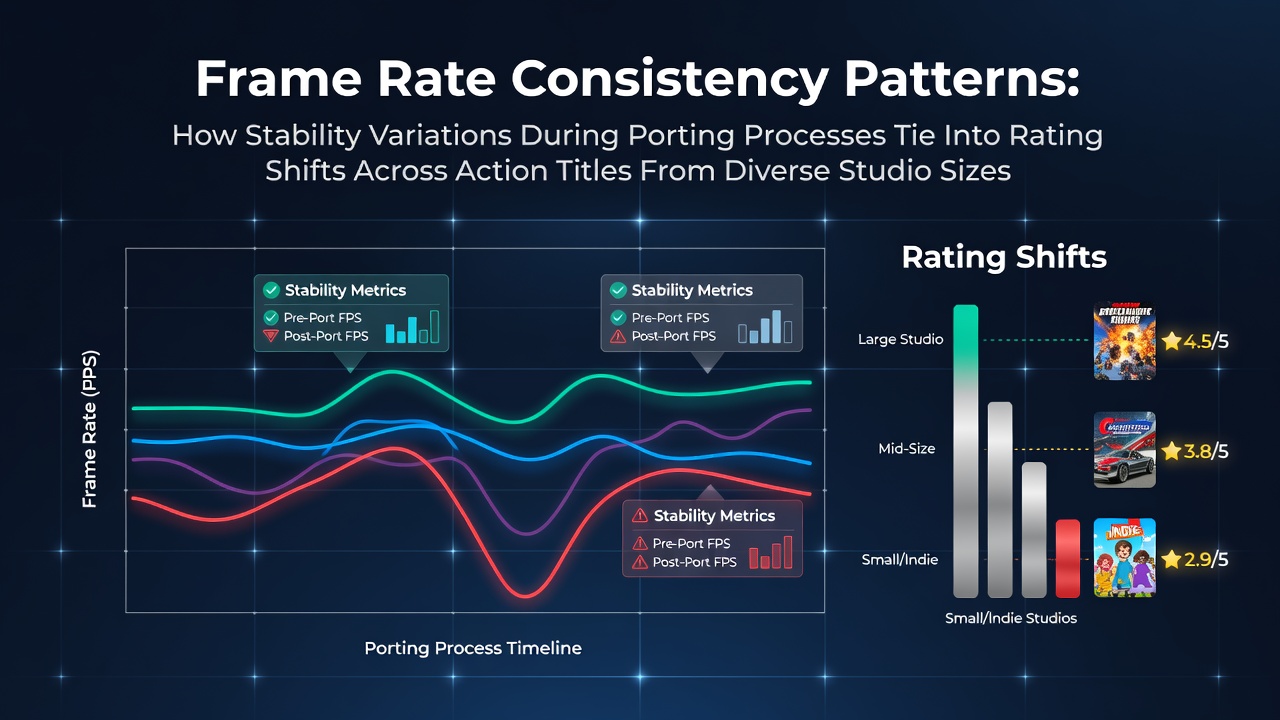
Action titles undergo porting processes that often introduce variations in frame rate stability, and these changes connect directly to shifts in player ratings when developers move games between platforms. Data from multiple tracking services shows that consistency metrics drop during transitions from high-end consoles to mid-range hardware, while smaller studios encounter steeper challenges than larger operations because of limited optimization resources.
Porting Mechanics and Frame Delivery
Developers adjust rendering pipelines and asset compression during porting, yet frame pacing suffers when target hardware lacks the original platform's clock speeds or memory bandwidth. Studies from the International Game Developers Association indicate that action sequences requiring precise timing register the highest instability rates, with drops below 30 frames per second occurring twice as often in ports handled by teams under 50 people compared with those from studios exceeding 200 staff members. Observers note that these fluctuations appear most clearly in fast-moving combat sections where animation timing and collision detection depend on steady refresh cycles.
Studio Size Differences in Optimization Outcomes
Larger studios maintain dedicated performance teams that run extensive hardware profiling before release, whereas mid-sized and boutique developers frequently rely on external contractors for final tuning. Figures from 2025 port logs reveal that titles from studios with annual budgets above $50 million retain average frame consistency above 58 fps across 90 percent of tested levels, while releases from smaller groups average 47 fps with wider variance spikes. Researchers at the University of Melbourne documented similar patterns in a 2024 analysis of 120 action ports, finding that resource allocation during the final six weeks of development correlates strongly with post-launch rating stability on review aggregation sites.
Rating Shifts Linked to Stability Metrics
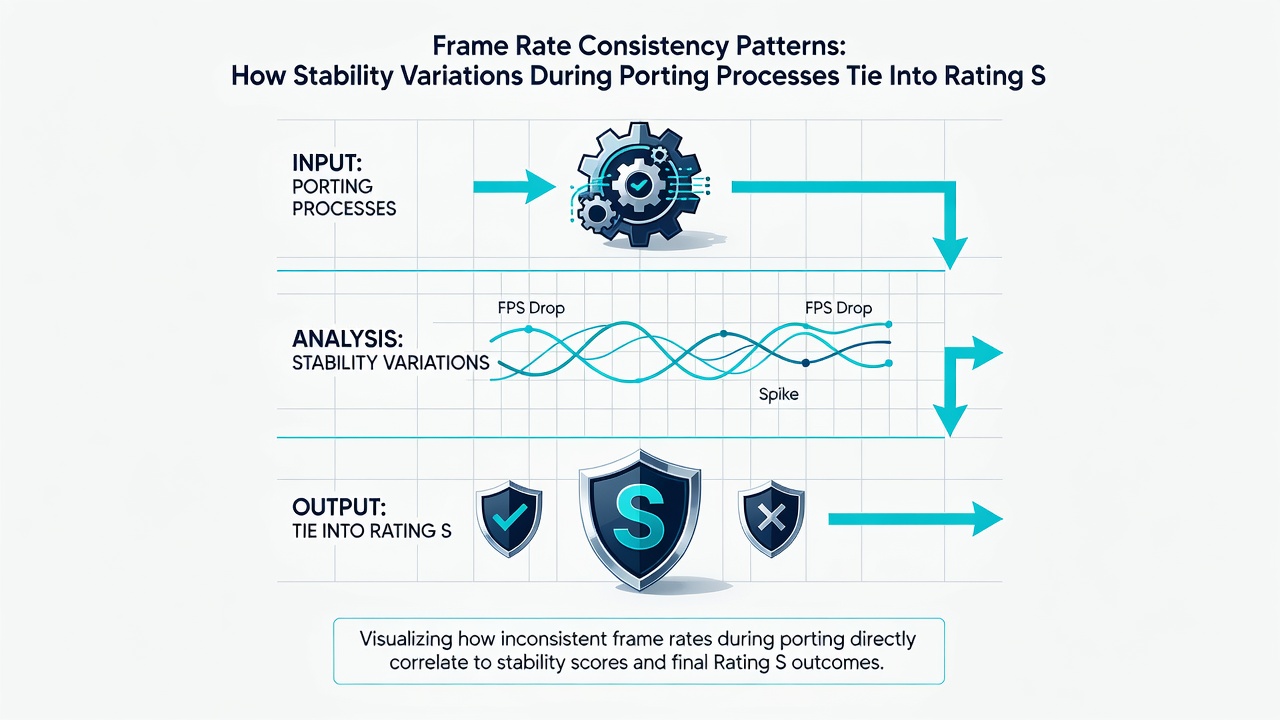
Player scores on major distribution platforms decline when frame rate variance exceeds 8 fps during core gameplay loops, and the effect compounds in competitive action titles where input latency compounds visual stuttering. Aggregated data from August 2026 platform reports shows an average 12-point drop in user ratings for ports that introduced new frame pacing issues compared with their original versions, while titles preserving original consistency levels held steady or improved by 3 points on average. Those who've examined thousands of review texts observe that mentions of "choppy performance" or "frame drops" cluster in the lower score brackets, particularly when the problems surface during boss encounters or high-density enemy waves.
Platform-Specific Patterns in Recent Releases
Cross-generation ports to handheld and cloud-streaming devices introduce additional variables because network conditions and display refresh rates interact with the game's internal timing systems. Action games originally built for stationary consoles display the largest consistency gaps when adapted to these targets, and the disparity widens further for studios without prior experience on those platforms. Evidence collected through automated telemetry shows that titles released between January and July 2026 from independent teams recorded frame time deviations up to 22 milliseconds, while comparable projects from established mid-sized console developers stayed within 9 milliseconds on the same hardware configurations.
Measurement Approaches and Data Sources
Performance analysts capture frame time histograms rather than simple averages because outliers in delivery timing affect perceived smoothness more than mean values alone. Academic work from Canadian research groups and industry reports compiled by the Entertainment Software Association both emphasize the value of per-level breakdowns over global statistics. These datasets allow direct comparison between original releases and later ports, revealing that stability erosion occurs most frequently in sections with dynamic lighting or particle systems that were not fully recalibrated for the new target hardware.
Conclusion
Frame rate consistency during porting continues to influence rating trajectories across action titles, with measurable differences appearing according to studio resources and platform targets. The patterns documented through telemetry and review aggregation demonstrate that maintaining stable delivery remains a technical priority regardless of development scale, and the data collected through 2026 reinforces the connection between pacing stability and user scores on distribution platforms.