Inventory Sorting Algorithms and User Frustration Indicators in Crafting-Focused Mobile Titles
Dana Hansen · Jul 2, 2026
Inventory Sorting Algorithms and User Frustration Indicators in Crafting-Focused Mobile Titles
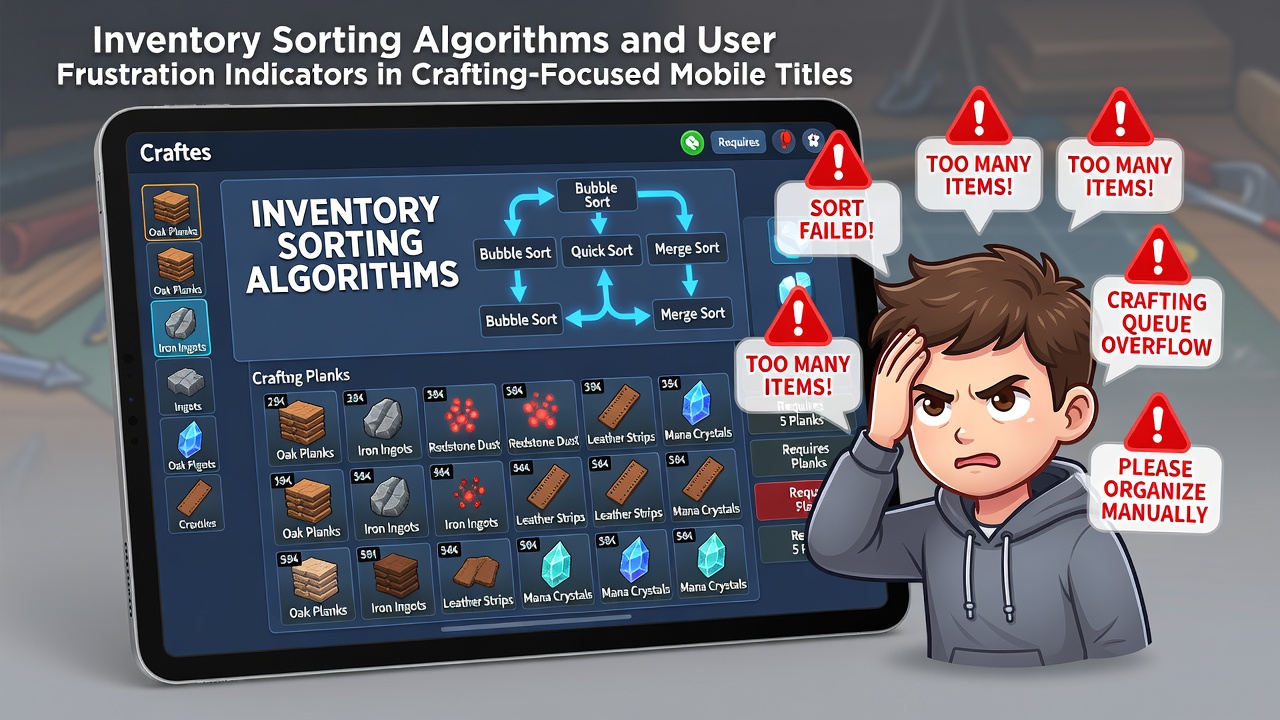
Crafting-focused mobile titles rely on inventory systems that process hundreds of resource entries during extended play sessions, and developers implement various sorting algorithms to organize these items without overloading device processors. Studies of popular releases indicate that selection sort and insertion sort appear frequently in early-stage mobile projects because their simple code structures fit within tight memory budgets, while more complex titles shift toward quicksort variants or merge sort implementations once player counts exceed certain thresholds.
Data collected across multiple platforms shows that linear search methods integrated with basic alphabetical sorting create noticeable delays once inventories surpass 150 unique entries, and players encounter longer wait times before accessing required components for new recipes. Observers note that titles released before 2024 often retained these lighter algorithms to maintain compatibility with older handsets, whereas updates in subsequent years introduced hybrid approaches combining bucket sort for categorized resources with heap structures for priority items.
Algorithm Choices and Performance Patterns
Developers balance computational efficiency against battery consumption when selecting sorting methods, since repeated inventory reorganizations occur every time players gather new materials or craft items. Research from Australian university labs tracking mobile game telemetry found that bubble sort derivatives produced measurable frame drops on mid-range devices during peak collection phases, prompting several studios to migrate toward radix sort for numeric resource stacks by mid-2025. Those same datasets revealed that quicksort implementations reduced average reorganization time by 40 percent in titles handling over 300 inventory slots, yet introduced occasional worst-case spikes when duplicate item identifiers clustered together.
European gaming associations documented similar transitions in 2026 reports covering independent development teams, where merge sort gained traction for its stable handling of large datasets without excessive recursion depth. These patterns emerged most clearly in survival crafting games that emphasize resource hoarding, and the shift correlated with lower reported session interruptions across regional user bases.
Measuring Frustration Through Engagement Metrics
User frustration indicators surface through aggregated telemetry such as inventory access frequency followed by immediate session termination, alongside review mentions of item retrieval difficulties. Figures from industry monitoring services indicate that titles using unsorted or poorly maintained inventory lists experience abandonment rates climbing above 25 percent after the first 10 hours of play, particularly when players must scroll through unsorted stacks to locate specific crafting components. One analysis of North American mobile releases highlighted how insertion sort lag times aligned with spikes in negative feedback regarding time spent managing rather than progressing through core loops.
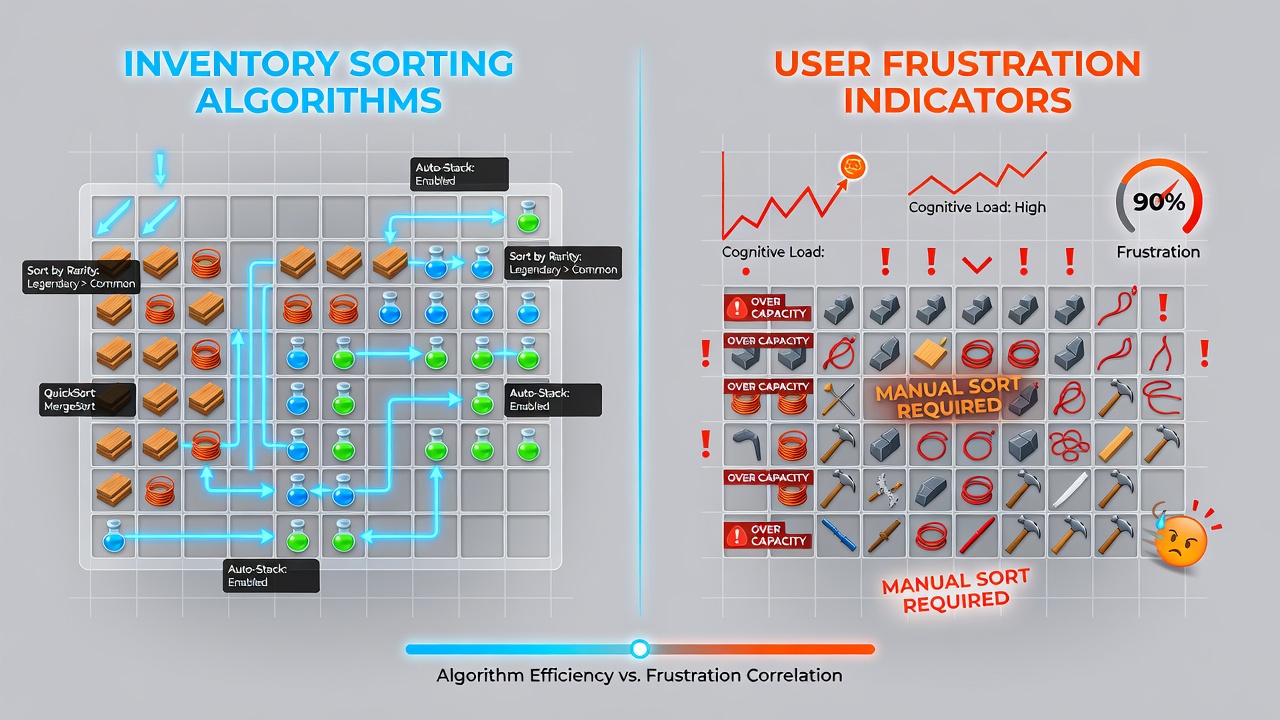
Additional indicators include repeated manual resorting attempts logged within game clients, which developers interpret as signals that automated algorithms fail to anticipate player priorities. Data shared by Canadian research groups tracking mobile UX patterns demonstrates that games incorporating stable sort variants saw reduced instances of these manual interventions, especially after players unlocked expanded storage through progression systems. In July 2026 updates across several live-service titles incorporated predictive sorting based on recent recipe usage, and preliminary telemetry suggested measurable declines in navigation complaints within the following update cycles.
Regional and Platform Variations
Platform differences influence algorithm selection as well, with iOS devices often supporting more memory-intensive methods than equivalent Android hardware in similar price tiers. Reports compiled by international trade organizations note that cross-platform titles frequently default to conservative sorting strategies to ensure consistent behavior, even when newer devices could handle advanced techniques. Observers tracking Asian markets identified higher tolerance for occasional sort delays in games emphasizing collection volume over speed, whereas Western releases prioritized faster access to reduce perceived friction during competitive events or limited-time crafting challenges.
Those who've examined quest log and inventory integrations across fantasy mobile titles report that combined sorting logic for both systems produces fewer abandonment events when algorithms account for item rarity alongside type, and this approach appears in several mid-sized studio releases from 2025 onward.
Conclusion
Inventory sorting algorithms in crafting-focused mobile titles continue evolving alongside hardware capabilities and player expectation data, with performance metrics guiding transitions from basic methods to more efficient structures. Engagement indicators tied to inventory access times provide developers with concrete signals for refinement, and ongoing telemetry analysis across regions supports incremental improvements that align system behavior with typical play patterns.