Menu Navigation Efficiencies Shape Resource Allocation Choices in Tactical Combat Scenarios
David Lang · Jun 27, 2026
Menu Navigation Efficiencies Shape Resource Allocation Choices in Tactical Combat Scenarios
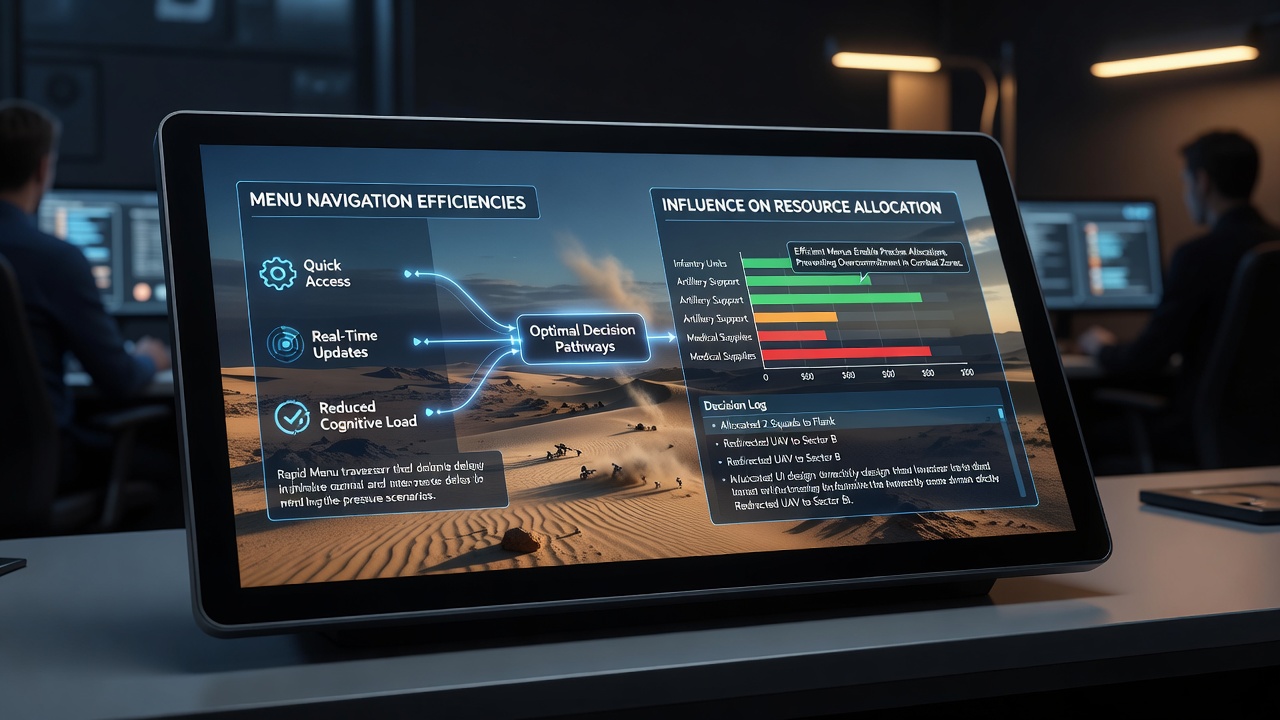
Small development teams creating tactical combat games face unique pressures when designing menu systems that support rapid resource allocation during intense scenarios, and data from multiple industry analyses shows how navigation speed directly correlates with player success rates in unit deployment and supply management. Boutique studios often operate with limited budgets yet produce titles that emphasize precise decision-making, where every second spent navigating submenus can shift outcomes in simulated battlefields. Researchers tracking gameplay metrics across independent releases have noted that streamlined menu pathways reduce the time between identifying a threat and committing resources like ammunition or reinforcements.
Core Mechanics of Navigation in Boutique Titles
Developers at these smaller firms integrate radial menus, hotkey overlays, and context-sensitive panels to minimize clicks during real-time or turn-based engagements, while studies compiled by the Entertainment Software Association indicate that games with fewer than four menu layers for core actions see allocation accuracy improve by measurable margins. One pattern emerges when observers examine titles from European and North American indie teams: efficient designs allow players to shift from scouting reports to supply drops without breaking combat flow, and this seamless transition supports sustained tactical pressure on opponents. Data shows that cluttered interfaces force repeated backtracking through options, which delays critical choices such as reinforcing a flank or reallocating fuel reserves.
Quantifiable Effects on Decision Timelines
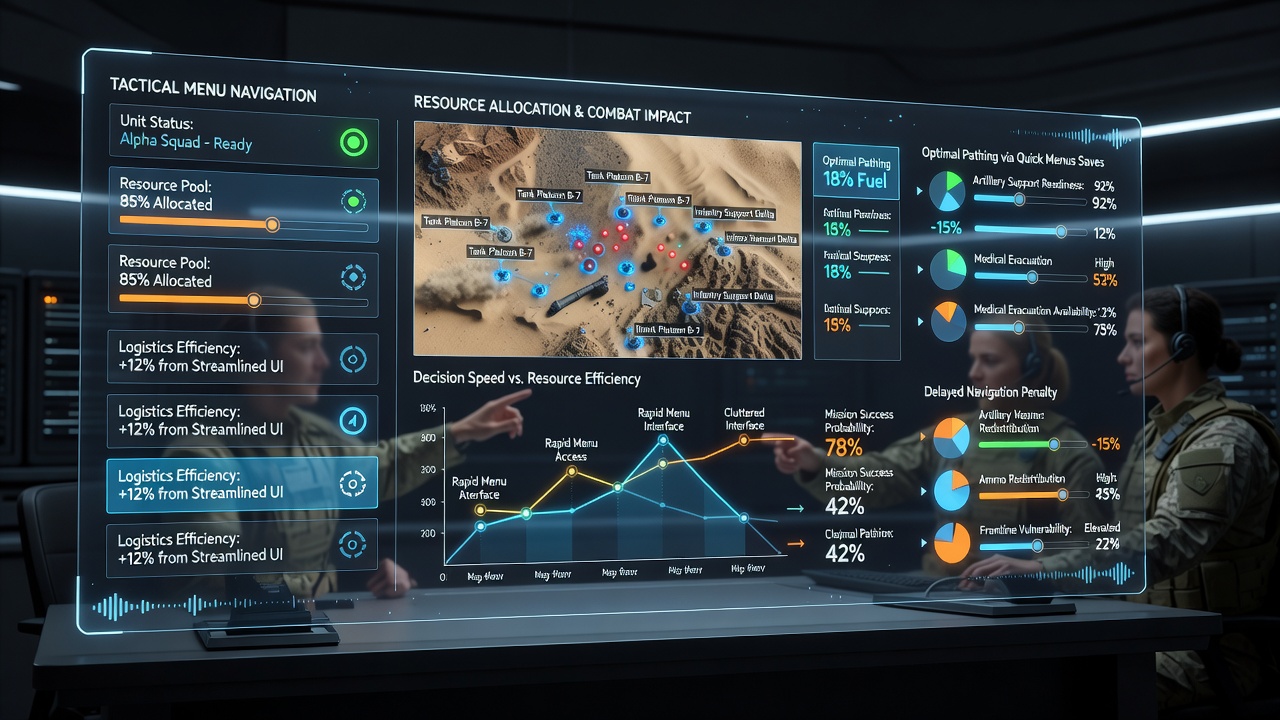
Analysis of session logs from multiple strategy releases reveals that navigation efficiencies cut average decision cycles by 15 to 25 percent in high-stakes combat sequences, enabling quicker responses to dynamic battlefield changes. Those who've studied telemetry from boutique productions note that players encountering optimized paths allocate resources like artillery barrages or medical kits with greater precision, reducing waste and preserving limited stockpiles for prolonged engagements. But here's the thing: when menu depth increases beyond optimal thresholds, hesitation patterns spike, and allocation errors rise as players second-guess selections under time pressure. Figures from recent reports highlight how these delays compound in multiplayer scenarios, where opposing forces exploit the window to seize initiative.
Platform and Hardware Influences on Menu Performance
Hardware variations across PC, console, and handheld devices further modulate how navigation efficiencies translate into allocation outcomes, with controllers introducing different latency profiles compared to mouse-and-keyboard setups. Observers tracking boutique releases scheduled for broader distribution note that adaptive control schemes, updated in patches around mid-2026, help bridge these gaps by remapping frequently used resource commands to accessible buttons. Research indicates that titles supporting customizable layouts achieve higher consistency in allocation success across input methods, because players tailor pathways to match personal playstyles rather than adapting to rigid defaults. This flexibility proves especially relevant for smaller studios targeting diverse audiences without extensive QA resources.
Case Examples from Independent Development Cycles
Take one studio that released a squad-based tactics game in 2025, where menu refinements after initial testing reduced navigation steps for supply distribution and produced documented gains in mission completion rates among early adopters. Another group working on an asymmetric warfare title incorporated predictive highlighting for high-priority allocations, and telemetry collected post-launch showed fewer instances of overcommitment to single objectives. What's interesting here is how these adjustments emerged from iterative playtesting rather than large-scale data collection, yet they align with broader patterns identified in academic reviews of interface design. The Digital Games Research Association has compiled findings that link reduced cognitive load during menu interactions to improved strategic depth, particularly in scenarios requiring simultaneous management of multiple unit groups and shared resource pools.
Emerging Trends and Measurement Approaches
By June 2026 several boutique developers had begun incorporating eye-tracking studies during internal prototypes to quantify visual search times across menu elements, yielding insights that guide further streamlining of allocation interfaces. These efforts complement traditional metrics such as actions-per-minute and error frequency, creating a fuller picture of how navigation influences broader tactical planning. Industry reports suggest that studios adopting such tools early gain competitive edges in community feedback cycles, because smoother experiences encourage deeper engagement with complex systems. Yet challenges persist when scaling these efficiencies to games featuring expansive unit rosters or branching campaign structures, where menu sprawl can still emerge despite best intentions.
Conclusion
Overall patterns from available datasets confirm that menu navigation efficiencies exert measurable influence on resource allocation quality within tactical combat frameworks developed by boutique strategy teams, with faster pathways supporting more deliberate and effective use of in-game assets. Continued refinement in this area, informed by cross-platform telemetry and targeted research, offers clear avenues for enhancing player agency without requiring expanded development resources. Those monitoring the space expect incremental advances to accumulate as more small teams integrate user testing protocols into standard workflows.