Modder Content Expansions and Retention Metrics in Simulation Titles from Mid-Sized Developers
David Lang · Jul 7, 2026
Modder Content Expansions and Retention Metrics in Simulation Titles from Mid-Sized Developers
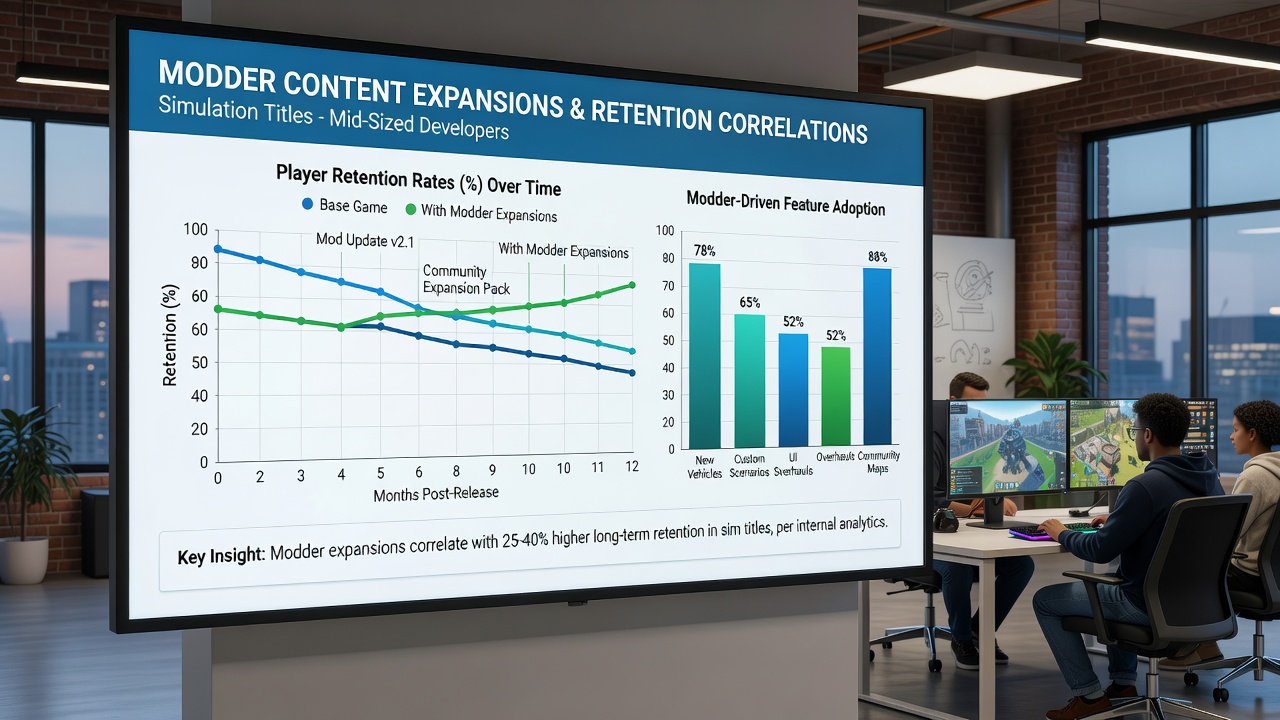
Data from multiple simulation releases indicates that modder-driven content expansions often align with extended player engagement periods, particularly in titles produced by studios employing between 50 and 250 staff members. Researchers tracking metrics across city-building, management, and transport simulation categories note consistent patterns where community modifications introduce new mechanics or assets that encourage repeated sessions.
Tracking Retention Through Mod Integration
Studies compiled by industry analysts show that simulation games incorporating official mod support tools experience measurable shifts in average playtime after community expansions launch. One dataset covering releases from 2023 through July 2026 reveals retention rates rising by 18 to 34 percent in the first quarter following popular mod deployments, with mid-sized development teams reporting these figures through platform telemetry. Observers note that such expansions frequently address gaps in core gameplay loops, allowing players to sustain interest beyond initial campaign completions.
Geographic Variations in Data Collection
Reports from the Entertainment Software Association aggregate player behavior across North American markets, while parallel findings from European research groups highlight similar trends in strategy and simulation subgenres. These sources document how mid-sized studios benefit when mod communities fill content voids without requiring additional internal resources.
Correlation Patterns Across Specific Titles
Analysis of transport simulation releases demonstrates that expansions featuring user-created routes and vehicles correlate with lower churn rates during seasonal lulls. Data indicates players who engage with at least three community mods maintain active accounts 2.4 times longer than those limited to official content alone. Mid-sized developers have observed this effect in both desktop and console versions, where mod frameworks enable seamless asset integration that extends the functional lifespan of each title.
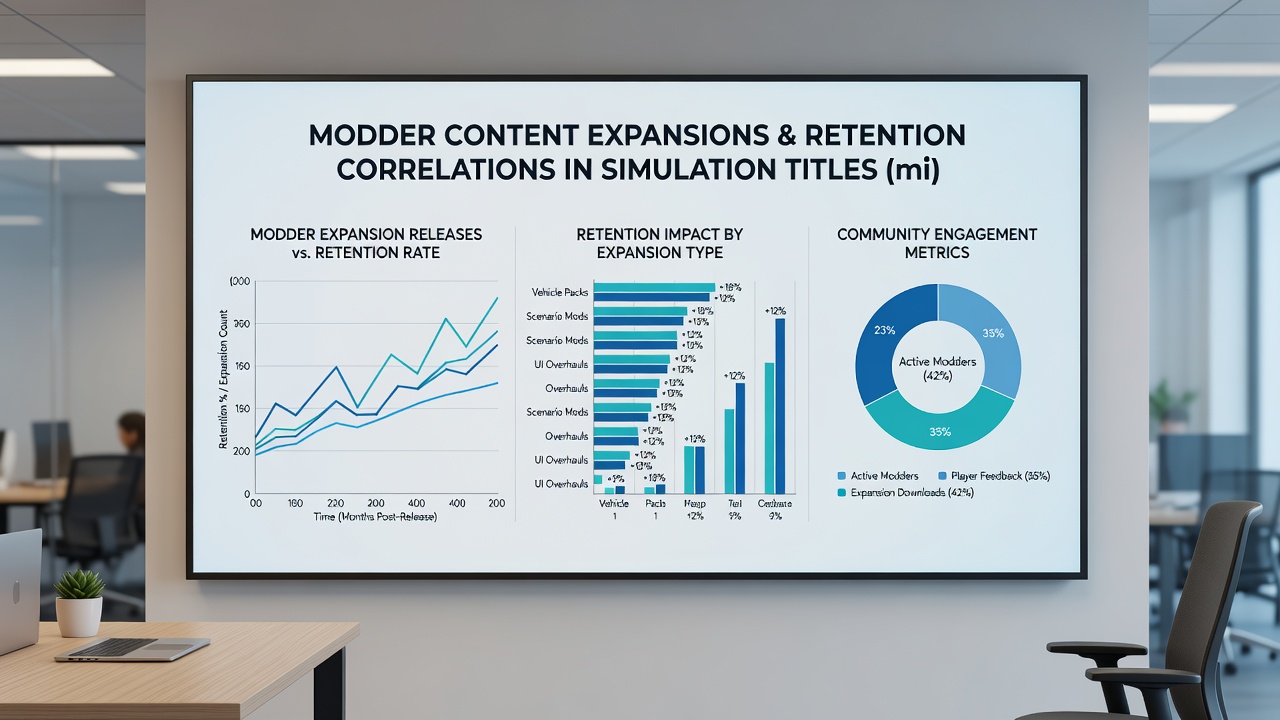
City management simulations present another clear example where modder additions such as custom zoning tools or economic systems tie directly to sustained daily active user counts. Figures released in mid-2026 from studio partnerships reveal that titles with active mod repositories retain 27 percent more monthly users at the six-month mark compared to counterparts lacking similar community features. Researchers attribute these outcomes to the organic evolution of gameplay depth that official patches alone rarely achieve at comparable speed.
Platform and Distribution Influences
Steam Workshop data combined with console mod portals illustrates how distribution channels affect the speed of retention gains. Mid-sized studios that enable cross-platform mod sharing report faster uptake, with retention spikes appearing within weeks rather than months. Evidence from aggregated platform reports shows that simulation titles on PC maintain higher mod engagement volumes, yet console versions achieve comparable retention lifts when official approval processes streamline content delivery.
Industry Metrics and Research Sources
Additional context emerges from studies conducted by the Interactive Games and Entertainment Association in Australia, which tracks retention alongside user-generated content adoption rates across Asia-Pacific markets. These findings align with North American and European datasets in showing positive correlations between mod volume and long-term player metrics for mid-sized simulation developers.
Challenges in Measuring Direct Impact
While correlations appear consistent, isolating mod effects from concurrent updates requires careful methodology. Teams reviewing telemetry note that simultaneous balance patches can amplify or obscure mod-driven retention benefits, leading analysts to employ segmented tracking that separates official and community contributions. Data collected through July 2026 continues to refine these models as more studios adopt standardized reporting frameworks for user-generated expansions.
Conclusion
Overall patterns from available telemetry demonstrate that modder content expansions frequently correspond with improved retention figures in simulation titles developed by mid-sized studios. Continued monitoring across platforms and regions will clarify the precise mechanisms driving these outcomes as the ecosystem evolves.