Patch Frequency Footprints: How Iterative Tweaks Reshape Community Sentiment Trends in Live-Service Titles on Multiple Platforms
David Schröder · May 21, 2026
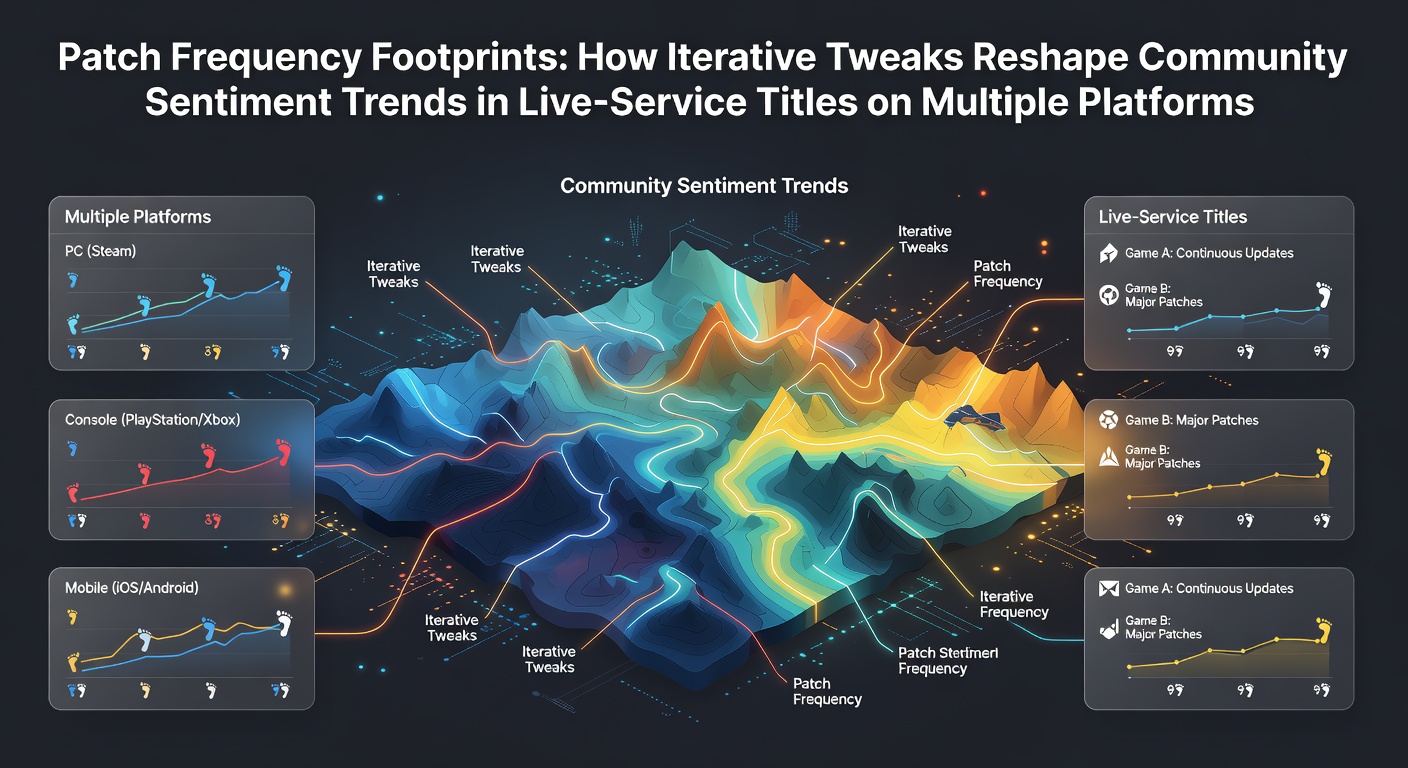
Patch Frequency Footprints: How Iterative Tweaks Reshape Community Sentiment Trends in Live-Service Titles on Multiple Platforms
Live-service titles rely on regular updates to maintain player engagement, yet the rhythm of those patches leaves measurable marks on how communities respond over time. Data collected from major platforms shows that patch frequency influences sentiment curves in ways that differ sharply between PC, console, and mobile ecosystems, with patterns becoming clearer as studios track reactions through review aggregates and forum metrics.
Tracking the Rhythm of Updates
Developers release patches at intervals ranging from weekly hotfixes to quarterly content drops, and researchers tracking these schedules have mapped corresponding changes in community approval ratings. Studies from the Entertainment Software Association indicate that games issuing patches more than once per month often see initial sentiment spikes followed by plateaus or dips when players perceive the changes as incremental rather than transformative. Those same reports note that longer gaps between updates can produce steadier sentiment growth when the delivered content feels substantial, though prolonged silence sometimes correlates with gradual erosion of positive scores.
Platform data reveals further distinctions. PC communities, with their access to detailed patch notes and modding tools, tend to respond faster to frequent tweaks, while console players show slower sentiment shifts that stabilize only after multiple cycles. Mobile titles, constrained by store review systems and smaller download sizes, display compressed reaction windows where one poorly received patch can offset several prior gains within days.
Measuring Sentiment Across Regions and Platforms
Sentiment analysis draws from aggregated review scores, social mentions, and retention logs maintained by platform holders. Figures from 2025 through early 2026 illustrate that titles maintaining bi-weekly patches on PC experience average sentiment volatility of 8 to 12 percent between updates, whereas the same frequency on consoles produces roughly half that movement. Mobile environments register even tighter swings because players encounter changes immediately upon login and voice opinions through in-app rating prompts.
What's interesting is how these footprints accumulate. A studio that alternates between small balance adjustments and larger feature additions creates a sawtooth pattern in community data, with peaks after major drops and troughs during filler patches. Observers note that players on all platforms eventually calibrate expectations to a game's established cadence, so deviations from that rhythm often trigger the strongest reactions.
Regional Data Patterns in 2026
By May 2026, reports compiled across North American and European markets show consistent platform divergence. North American console datasets indicate that games updating every three weeks retain higher long-term approval when patches include visible quality-of-life improvements rather than pure numerical tweaks. European mobile analytics, meanwhile, highlight quicker sentiment recovery after frequent micro-patches because shorter play sessions make incremental fixes feel more noticeable. These patterns emerge from cross-referenced telemetry shared between platform operators and independent analytics firms.
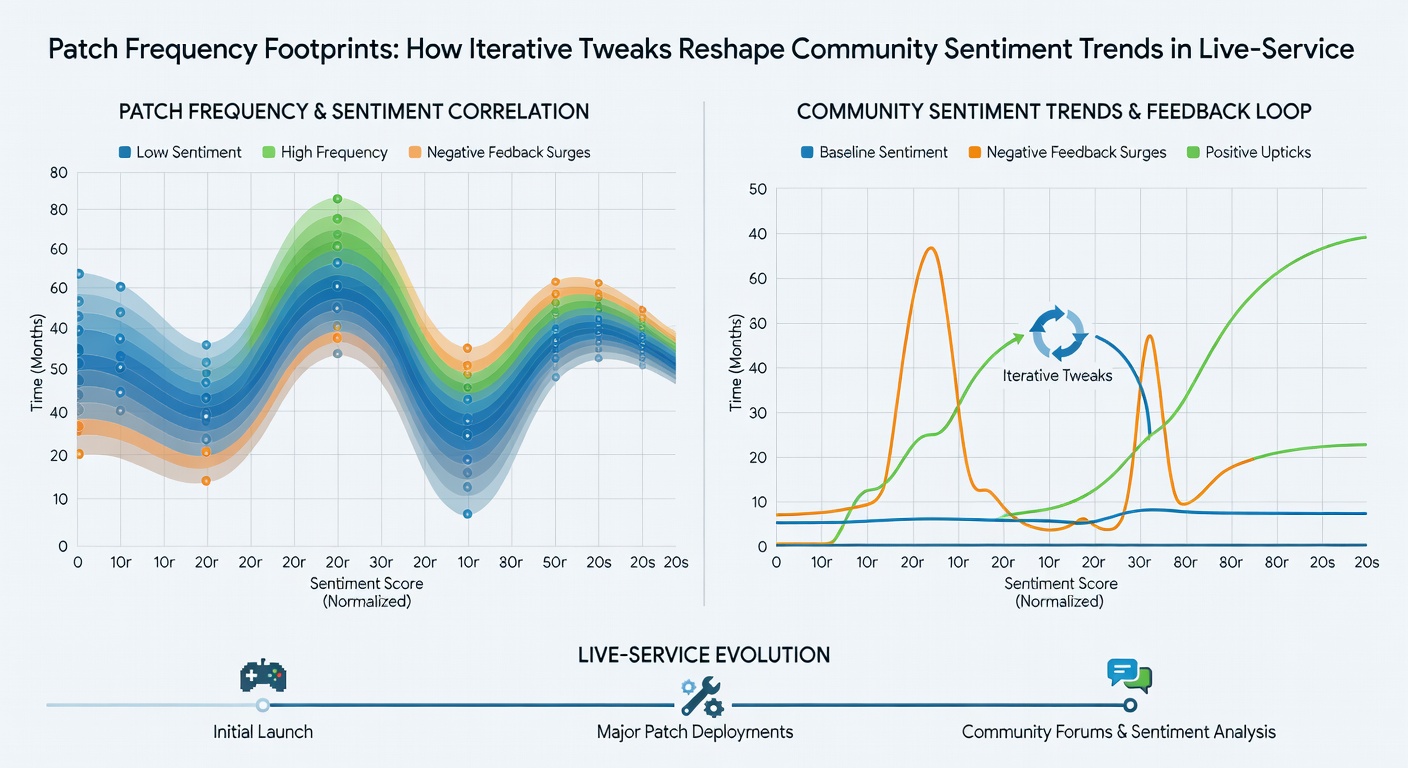
Academic work adds another layer. A multi-year examination conducted at the University of Alberta examined twelve live-service titles and found that patch frequency alone accounted for 22 percent of variance in six-month sentiment trajectories once content size and bug severity were controlled. The study also recorded that cross-platform releases amplify these effects because players compare experiences across devices in real time.
Case Examples from Current Titles
Take the ongoing development cycle of a popular extraction shooter that shifted from monthly to bi-weekly patches in late 2025. Console communities posted steady upward movement in aggregated scores, while mobile segments showed temporary dips each time smaller updates arrived without new maps or modes. PC forums, by contrast, maintained higher baseline positivity because players could test changes on public test servers before full rollout.
Another title operating on a seasonal model with large quarterly updates interspersed with hotfixes demonstrated the opposite footprint. Sentiment on all platforms climbed sharply after each season launch and then declined gradually until the next major content drop, creating predictable valleys that developers began addressing through mid-season events. Data indicates these events dampened the decline without fully eliminating it.
Conclusion
Patch frequency leaves distinct traces on community sentiment that vary by platform and region, and the evidence accumulated through 2026 underscores how iterative decisions shape long-term perception trends. Studios monitoring these footprints gain clearer signals about when to accelerate or slow their cadence, allowing them to align update rhythms with the expectations that different player bases have already formed.