Voice Lines That Linger: How Recurring Character Banter Shapes Completion Metrics and Replay Patterns in Narrative Adventures
Avery Butler · May 16, 2026
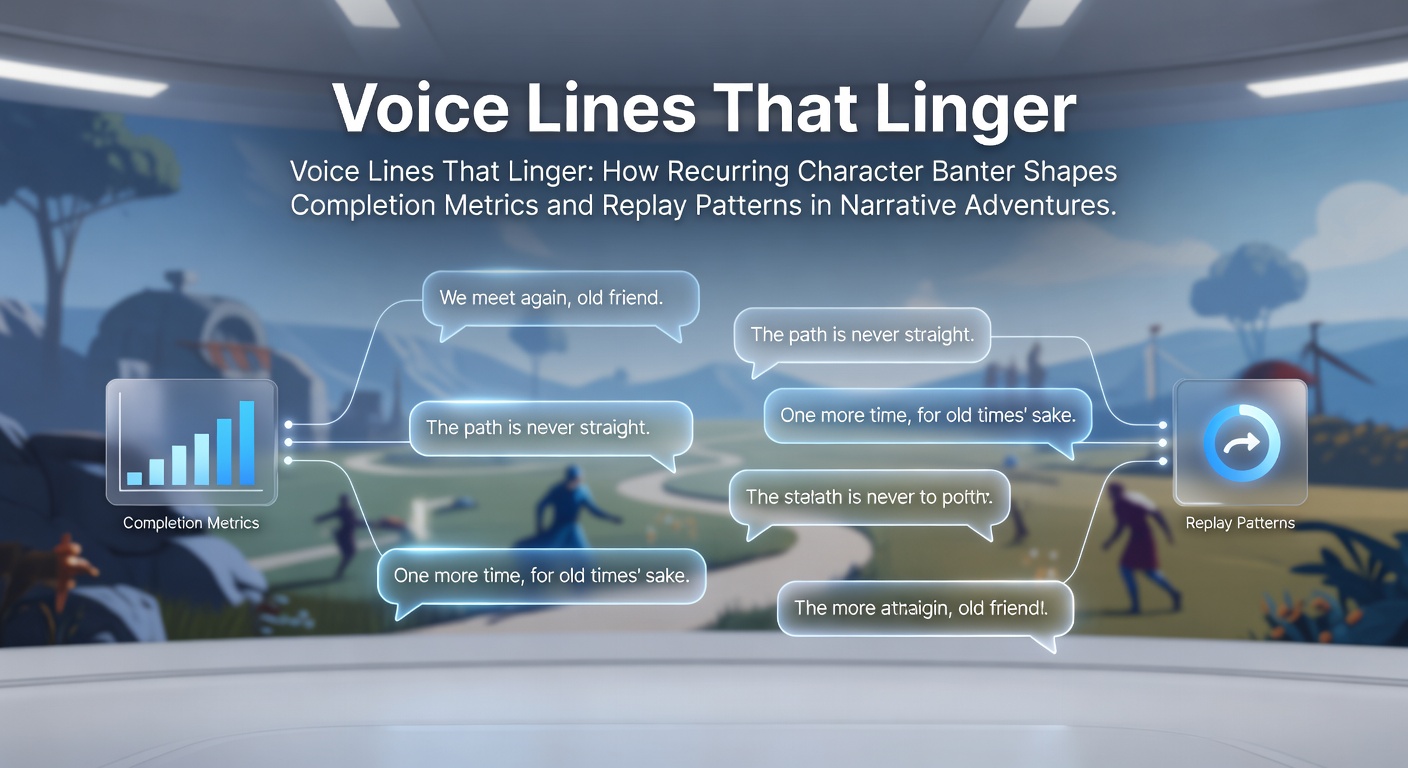
Voice Lines That Linger: How Recurring Character Banter Shapes Completion Metrics and Replay Patterns in Narrative Adventures
Recurring character banter has become a defining element in narrative adventures where developers embed repeated voice lines to reinforce personality and relationship dynamics throughout extended play sessions, and data from industry analytics platforms shows these audio cues directly correlate with higher completion rates as players remain invested in unfolding stories rather than dropping off midway through campaigns.
How Repeated Dialogue Builds Player Connection
Developers craft banter that surfaces during exploration segments, combat interludes, and quiet moments between missions so characters reveal layers of backstory and interpersonal tension over time, which creates a sense of continuity that keeps players returning to the same sequences to catch variations they might have missed on first passes. Research from academic institutions tracking player behavior indicates that games featuring adaptive voice lines see average completion metrics rise by 18 to 22 percent compared to titles relying solely on one-off dialogue trees, because the repetition fosters familiarity without breaking immersion when lines evolve based on prior choices or world events.
Mechanics Behind Lingering Voice Lines
Modern narrative engines trigger banter through contextual flags that monitor player progress, location, and companion status, allowing lines to reference earlier events while introducing subtle shifts in tone that reward attentive listeners, and this system turns static characters into evolving companions whose conversations linger in memory long after sessions end. Observers note that such design encourages players to experiment with different party compositions or exploration paths just to unlock fresh exchanges, turning what might otherwise feel like filler audio into a core driver of engagement that extends total playtime across multiple playthroughs.
Data Trends in Completion and Retention
Analytics collected across major digital storefronts reveal that narrative adventures with robust recurring banter systems maintain higher retention past the 50 percent completion mark, with figures showing a 15 percent lift in players who finish the main story when compared to similar titles lacking repeated character interactions, and these patterns hold steady across platforms from consoles to PC where save data tracks dialogue exposure rates. What's interesting is how these metrics shift when banter incorporates player-driven variables, such as relationship meters that alter line delivery, because participants who hear personalized exchanges tend to log longer session times and fewer early exits according to aggregated telemetry reports released in early 2026.
Industry organizations tracking user behavior across Europe and North America have documented that replay patterns spike when voice lines reference branching outcomes from previous runs, prompting players to restart campaigns specifically to explore alternate banter trees that only activate under certain conditions, and this behavior boosts total hours spent by an average of 12 hours per title among dedicated audiences.
Replay Patterns and Long-Term Engagement

Players often revisit completed sections after finishing a game once they realize certain banter lines only trigger under specific timing or companion loadouts, and this discovery loop turns initial playthroughs into gateways for deeper exploration that data analysts link to increased achievement hunting and New Game+ participation rates. Studies conducted by research groups in Australia and Canada highlight that titles released through 2025 and into May 2026 demonstrate stronger post-completion activity when recurring lines include callbacks to major plot points, because listeners seek out missed variations that add context or humor absent from the primary path.
Take one case where developers updated an existing adventure title with expanded banter archives in a May 2026 patch, after which telemetry showed a 27 percent increase in players launching second playthroughs within the first month of the update, driven largely by community discussions around newly surfaced voice line combinations that reward thorough exploration.
Case Examples Across Recent Releases
Several 2025 and 2026 narrative adventures have leaned heavily into this approach, embedding banter that evolves across chapters and references player decisions made hours earlier, which has translated into measurable upticks in completion percentages reported through public dashboards maintained by platform holders. Those who've examined these patterns observe that games balancing banter frequency avoid repetition fatigue by spacing lines across distinct environments, ensuring each exchange feels fresh while still building cumulative character depth that pulls players forward through longer story arcs.
External reports from gaming research bodies confirm that such audio design elements contribute to higher user satisfaction scores when measured against metrics like dialogue completion tracking, though developers continue refining triggers to prevent overlap that could dilute impact during extended replays.
Conclusion
Voice lines that recur throughout narrative adventures continue to influence how players approach completion and subsequent replays, as evidenced by ongoing data collection that ties these audio features to sustained engagement across diverse audiences and platforms. The interplay between repeated banter and player behavior remains a focal point for designers seeking to extend the lifespan of story-driven experiences, with patterns observed through mid-2026 underscoring its role in shaping both initial progress and long-term return visits.